Bricklaying for garden walls, boundaries and piers

New garden and boundary walls built on proper foundations, and old walls that are leaning or have fallen rebuilt to match. We copy the bond and the mortar, and cap the top so the wall stays dry.

  • 18 years in the trade
  • Free quotes
  • Bond and mortar matched
  • Copings and DPC fitted

Get a free quote

Send us the details on WhatsApp, or by email if you prefer. We reply with a price or a time to visit.

Prefer to talk? Call 07487 625926

Walls built to stay standing

A garden wall looks simple, but it stands in the open with rain on both faces and frost getting into the top. That is why so many lean, crack or lose their copings. Good bricklaying starts below ground with a foundation sized for the wall and finishes with a coping and damp-proof course that keep water out of the brickwork.

We build new garden walls, boundary walls and brick piers for gates, and rebuild walls that have started to lean, bulge or come down. Where a wall has to tie in with an existing one or with the house, we match the bond, the brick and the mortar colour so the new work does not look like an afterthought.

Not every tired wall needs rebuilding. If the bricks are sound and only the joints have gone, repointing the wall may be all it needs, and odd damaged bricks can be swapped through our brickwork repairs service. Old walls laid in lime are best repointed or rebuilt in lime too, as explained on our period pointing page.

We also lay the brickwork on smaller builds such as porches and small extensions. Our brickwork pointing guide covers the mortar side, and the areas we cover page lists the towns we work in.
What goes into a well built wall

The parts you never see matter as much as the face.

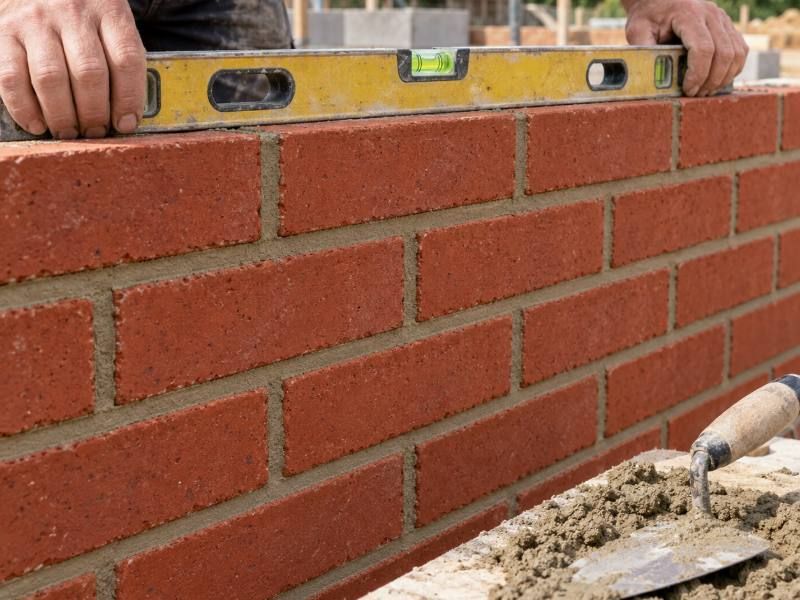
Concrete foundation and first courses of a new brick garden wall

Foundations and groundwork

A wall is only as good as what it stands on, so the work starts below ground.

  • Old leaning wall taken down
  • Sound bricks cleaned for reuse
  • Footing dug down to firm ground
  • Concrete foundation sized for the wall
  • Roots and soft ground checked
  • First courses set out level
  • Damp-proof course near the base
  • Piers built in on longer runs
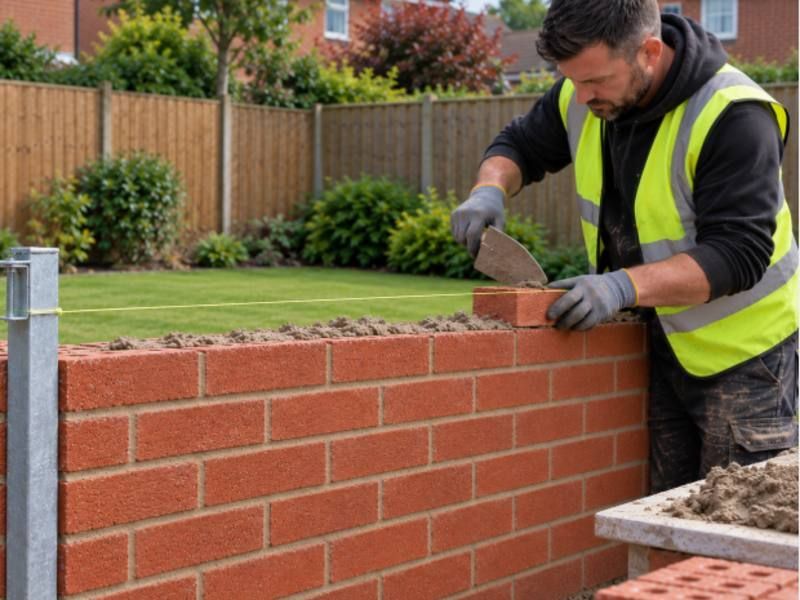
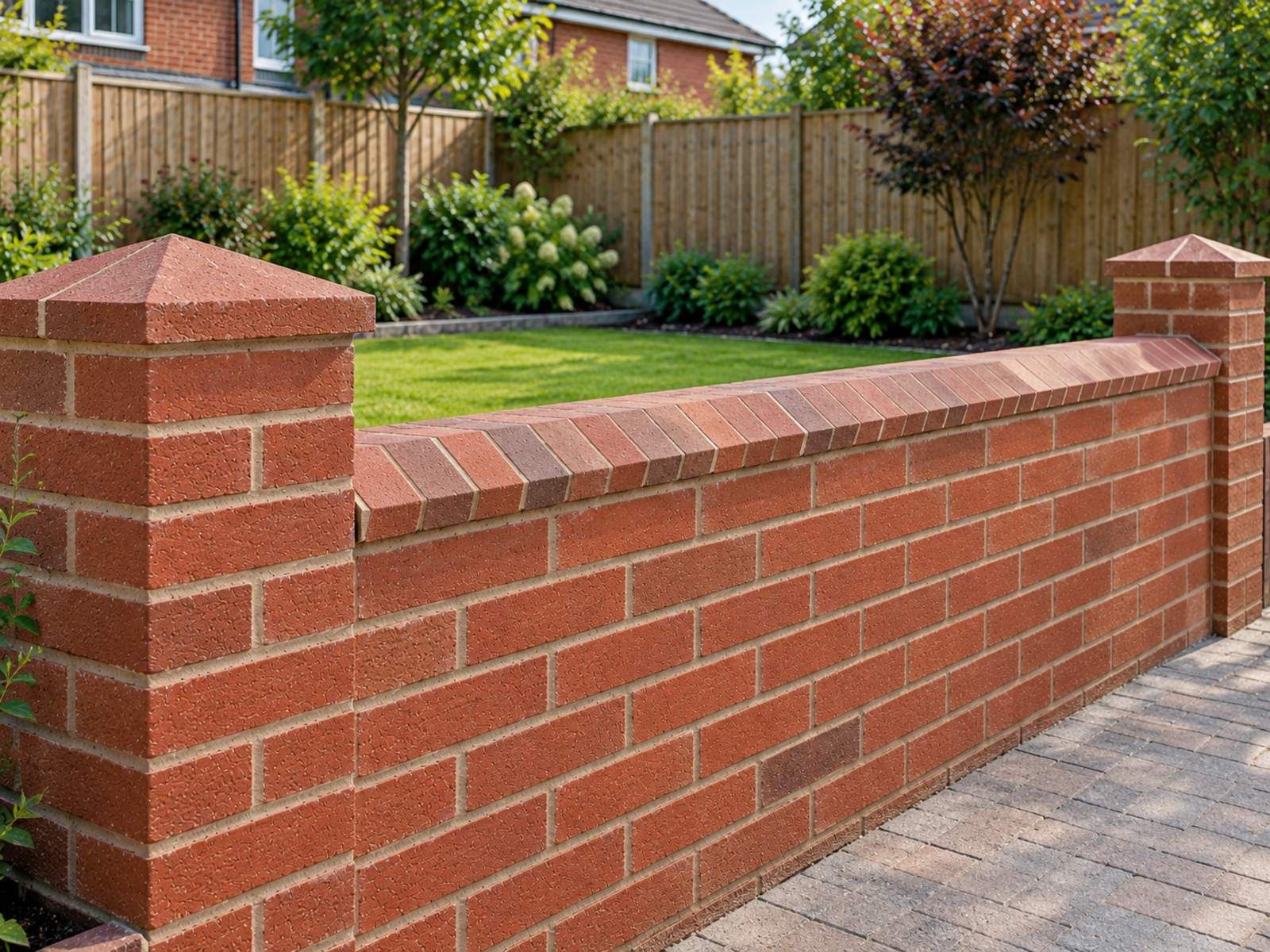
Finished brick boundary wall with piers and a coping along the top

Brickwork, bond and coping

The visible brickwork is laid to line and level and finished with a coping that keeps the weather off.

  • Stretcher, Flemish or English bond
  • Bricks matched to the house
  • Mortar colour matched
  • Laid to line, level and plumb
  • Brick piers for gates and corners
  • Joints finished to a neat profile
  • DPC under the coping
  • Coping or brick-on-edge capping

How a new or rebuilt wall comes together

  1. Tell us about the wall

    Send photos and rough sizes, plus a picture of any brickwork the new wall needs to match.

  2. Price and plan

    We quote from photos or a visit and agree the bricks, bond and finish with you.

  3. Foundation and build

    The footing goes in first, then the wall rises course by course to line and level.

  4. Coping and clean

    The top is capped to shed water, the joints are finished and the site is left tidy.

Why our walls stay straight

Laid true

Every course is run to a line and checked with a level so the wall stays plumb.

Bond and brick matched

Stretcher, Flemish or English bond is copied from the wall your new work joins.

Proper foundations

Footings are sized for the height and length of the wall rather than skimped.

Tops that keep water out

A damp-proof course and a coping stop rain soaking down through the wall.

Mortar to suit

Cement mortar for modern brick and lime for older walls, coloured to match.

18 years of bricklaying

Garden walls and piers have been part of our work for 18 years.

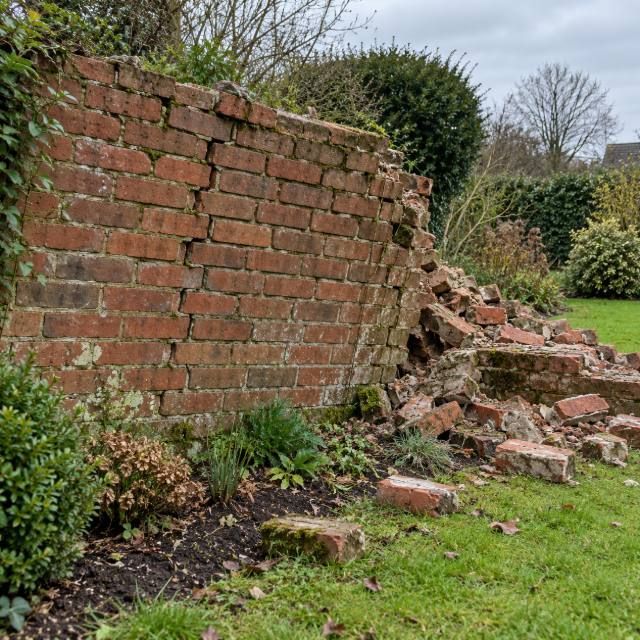
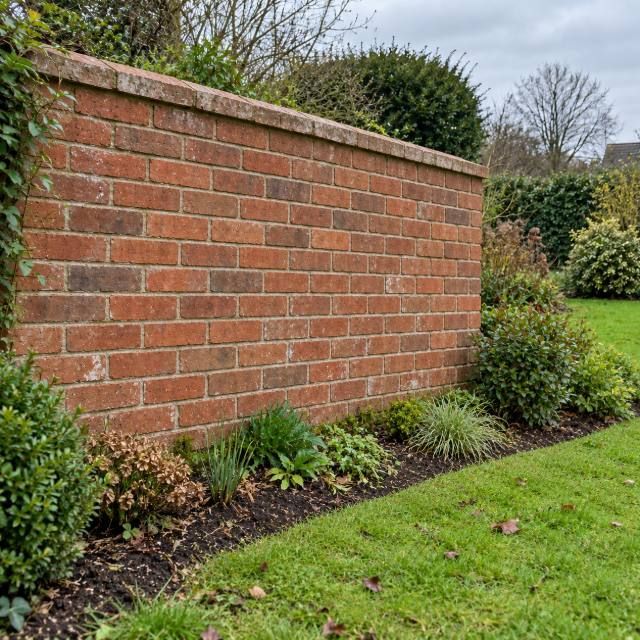
Before and after: rebuilding a garden wall

Leaning brick garden wall rebuilt with a new coping before
Before
Leaning brick garden wall rebuilt with a new coping after
After

Bonds, copings and why garden walls fall over

Bond is the pattern the bricks are laid in. Stretcher bond, with every brick showing its long face, is standard on modern cavity walls and single-skin walls. Older and thicker walls are often in English bond, with alternate rows of long faces and ends, or Flemish bond, where long faces and ends alternate along each row. A wall a full brick thick in either of these is much sturdier than a single skin, and matching the existing bond is what makes new work look right.

Garden walls tend to fail for one of a handful of reasons. The foundation was too shallow or has been undermined by roots, the wall was built too tall and thin for its length without piers, or water has soaked in through an open top and frost has broken it up. Rebuilding on a proper footing, adding piers where the length calls for them and capping the wall well deals with all three.

The coping is the wall's roof. A coping stone or brick-on-edge course with an overhang and a drip throws rain clear of the faces, and a damp-proof course just beneath it stops water soaking down into the brickwork. A second damp-proof course near ground level keeps moisture from rising. A wall that holds back soil or stands unusually tall may need design advice before it is built.

Bricklaying and garden wall questions

Can you rebuild a garden wall that has fallen down?

Yes. We clear the fallen brickwork, save the bricks that are still sound, put in a new foundation if the old one has failed and rebuild the wall, matching new bricks to the old where needed.

Can you reuse the bricks from my old wall?

Often. Whole, sound bricks can be cleaned of old mortar and laid again, which also helps the rebuilt wall match. Broken or badly frost damaged ones are replaced with reclaimed or new bricks.

Does a garden wall need a foundation?

Yes. Even a low wall needs a concrete footing on firm ground. Its size depends on the height and thickness of the wall and the ground it sits on.

What is the best coping for a brick garden wall?

A coping that overhangs both faces with a drip underneath sheds water best, whether it is stone, concrete or engineering brick. A brick-on-edge finish can suit older walls. Whichever you choose, a damp-proof course beneath it helps keep the wall dry.

Can you build brick piers for a gate?

Yes. Gate piers are built solid enough to carry the gate, with the hinge positions planned as the pier goes up, and finished with a cap to match the wall.

Do I need permission to build a garden wall?

Many low garden walls can go up without planning permission, but limits on height and rules near roads and listed buildings vary. Check with your local council before a new boundary wall is built.

Tell us about the wall you need

Send photos and rough measurements on WhatsApp or call us. Bricklaying quotes are free.